Sodalite, often called the blue crystal of logic, emits a light, calming energy that sharpens the mind and encourages deep contemplation. It helps develop the ability to reason logically based on rational thought and enhances analytical skills, intuition, observation, and creativity.
It does not give wisdom directly but opens the mind so that one can form it independently. It strengthens self-discipline, efficiency, organization, and encourages a clear and deliberate approach to life.
Properties and Energetic Significance
Sodalite is one of the densest and most grounding deep-blue stones, making it an excellent companion for meditation and introspection. It supports:
Self-reflection
Honest assessment of one’s motives, strengths, and weaknesses
Recognition of personal gifts and recurring life patterns
It dispels mental confusion and calms the mind, making it easier to absorb new information. It enhances awareness, idealism, and the pursuit of truth. It effectively helps dissolve feelings of guilt and fear, encouraging the individual to acknowledge and articulate true emotions.
Mineral characteristics
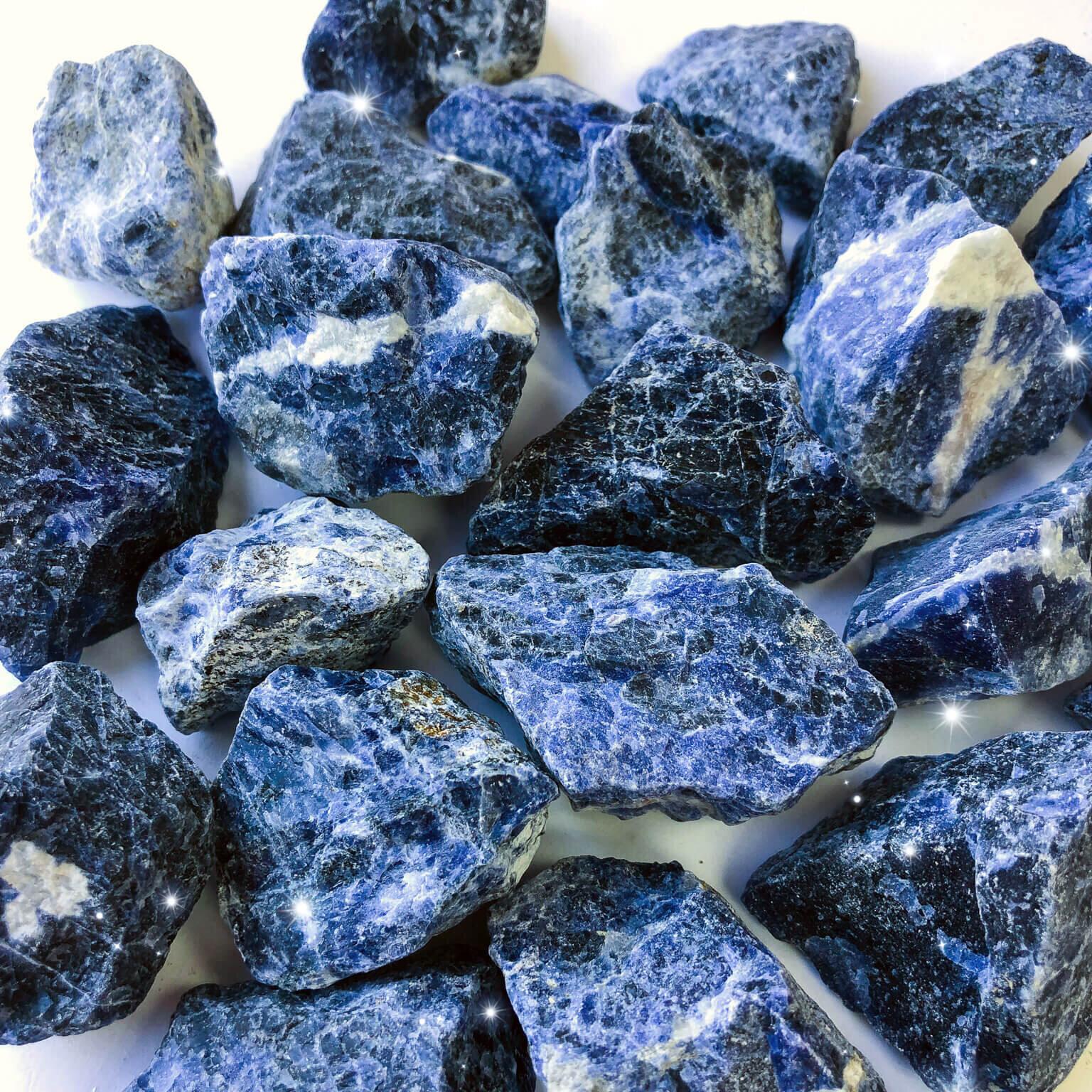
Sodalite belongs to the silicate group and is an intensely blue aluminum silicate. Its most recognizable feature is its rich blue color with characteristic white veins or calcite patches, often with small black inclusions.
It can also appear in:
Gray
Yellow
Green
Pink
High-quality blue or blue-violet sodalite is used in jewelry, while lower-quality material is used for carvings, inlays, and decorative panels. It typically occurs in massive or granular form and only rarely forms transparent or translucent crystals.
How to Distinguish Sodalite from Lapis Lazuli
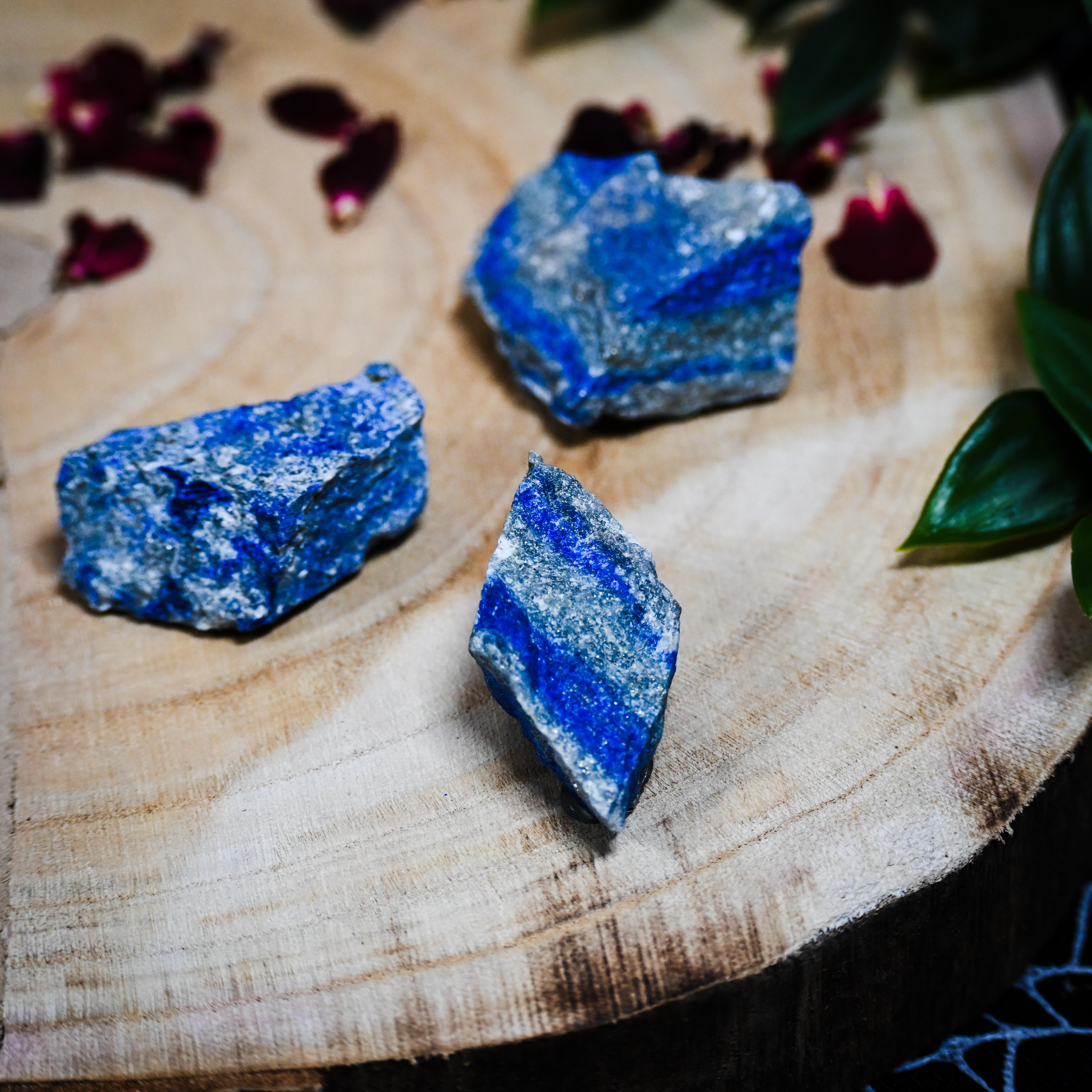
Sodalite is often confused with lapis lazuli. Key differences:
Sodalite lacks the pyrite inclusions characteristic of lapis lazuli.
It has white (not blue) streaks.
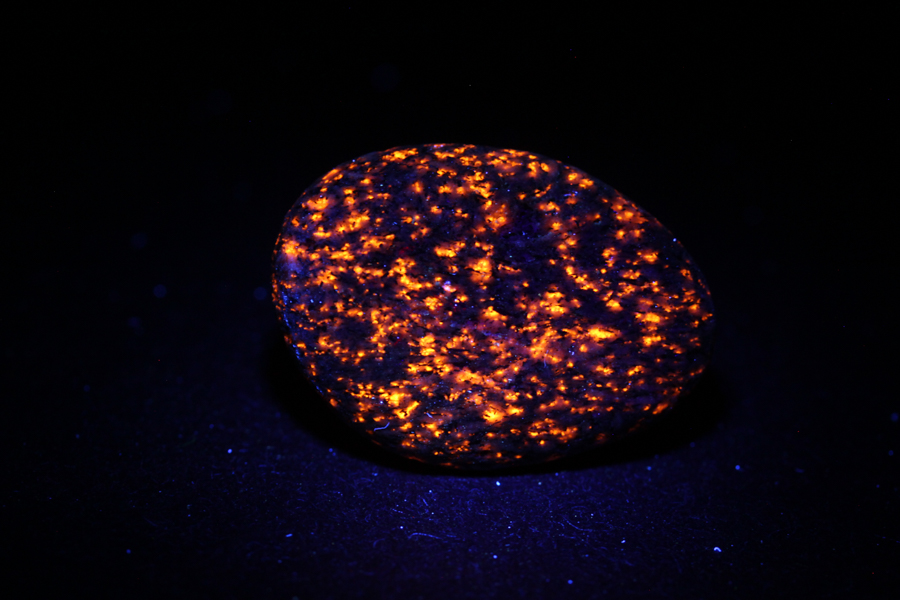
Under UV light, it often glows orange.
It typically shows white calcite veins.
Sodalite
Lapis lazuli
History
Sodalite’s rich royal blue color has long been admired as a decorative gemstone. Although massive sodalite formations are opaque, crystals are usually transparent to translucent. Discovered in 1811 in the Ilimaussaq intrusive complex in Greenland, sodalite did not gain significance as a decorative stone until 1891, when large deposits of fine material were found in Ontario, Canada.
Scottish mineralogist Thomas Thomson also discovered sodalite in the 19th century. By 1891, it was classified and recognized as a decorative gemstone.
Its prominence as an ornamental stone grew over the past two centuries. The most famous source is the Princess Sodalite mine east of Bancroft, Ontario, named in 1901 after a Welsh princess. During a royal visit to the Buffalo World’s Fair, she was gifted Bancroft sodalite and was so impressed that arrangements were made to extract enough stone to decorate her London residence, Marlborough House. In 1906, 130 tons of rock were sent to England for use as decorative stone in the royal home. The exceptional sodalite from this mine is noted for its intense blue color, surrounded by a lavender-white mineral called nepheline. It is often referred to as Princess Blue or by its older trade name, Alomite.
Use and purpose
Sodalite is ideal for people who are:
Highly sensitive or defensive
Impulsive
Prone to anxiety or panic attacks
It helps stabilize the mind and facilitates the transition from emotional reactions to rational thinking.
How to use it:
Hold it in your palm for quick calming.
Wear it as jewelry to relieve tension.
Place it on the third eye area for clearer insight.
Put it under your pillow for peaceful sleep.
It resonates with the throat chakra, supporting clear expression of thoughts and needs. It combines logic with intuition and encourages a pursuit of truth and loyalty to oneself.
Sodalite and emotional balance
Sodalite:
Calms panic attacks
Dissolves guilt and fear
Aids with control issues
Encourages self-confidence and trust in oneself
It is particularly supportive for women during hormonal changes (PMS, menopause), helping regulate emotional outbursts and promote inner balance. It is also helpful during life transitions such as aging, loss of fertility, or the “empty nest” syndrome.
Sodalite as a Creator's crystal
Sodalite is a talisman for writers, poets, and artists. It enhances:
Creativity and inspiration
Focus
Clear communication
Ingenuity and originality
Use it as support for learning or research, as it helps organize new information and encourages deep thinking. It also acts as an energetic shield, protecting ideas and inspiration. In group settings, it fosters unity, shared goals, and a sense of mutual support.
Physical effects
Traditionally, sodalite is believed to:
Regulate metabolism
Improve mineral absorption
Support the immune system
Aid throat and digestive issues
Lower blood pressure
Support chronic throat, trachea, and vocal cord problems
Reduce blood sugar
(Crystal use does not replace medical treatment.)
UV response
Most sodalite glows orange under UV light. Ultraviolet light is absorbed and re-emitted at a longer wavelength, producing a characteristic yellow-orange glow.
Crystal structure
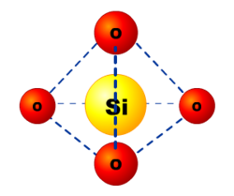
Sodalite belongs to the silicate group. Silicates are salts of silicic acids and are a main component of igneous rocks. Their basic building unit is a tetrahedron (SiO₄), with a silicon atom at the center and four oxygen atoms at the corners. These tetrahedra can link into various spatial structures.
Main deposits
Sodalite is found mainly in Brazil, Canada, India, Namibia, the USA, Australia, and Russia.